
Authored by Levi C. Webb
Autonomous drones and sensor networks are expanding the ability to monitor ocean temperatures and conditions in real time, improving climate tracking and forecasting accuracy.
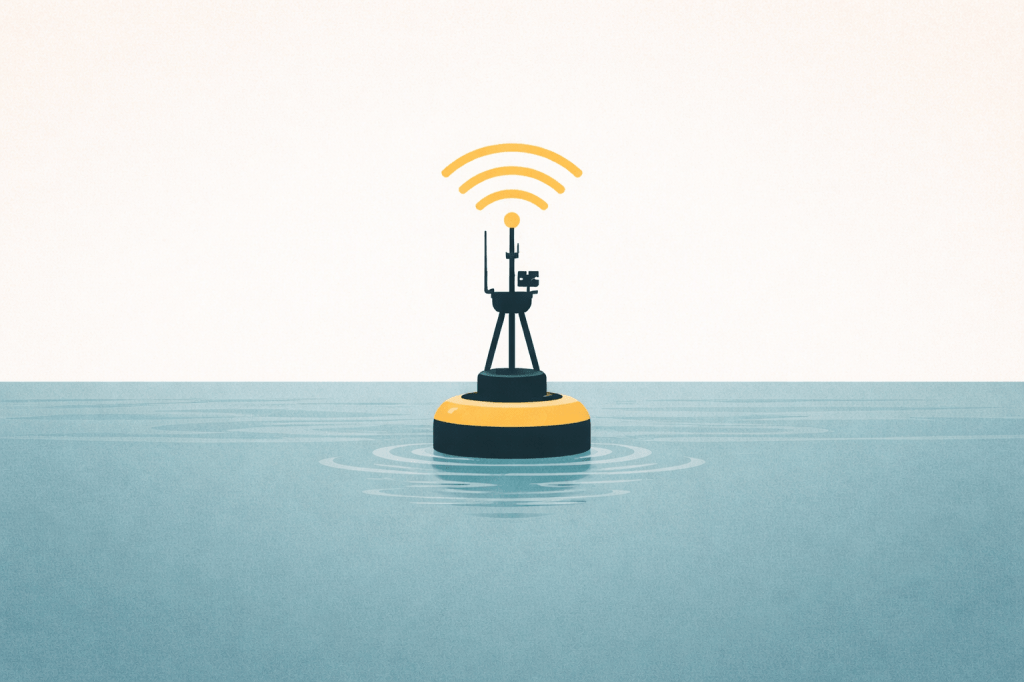
New fleets of autonomous ocean sensors are being deployed to monitor temperature, salinity, and environmental conditions, providing scientists with continuous data across regions previously difficult to observe.
Autonomous ocean monitoring systems are becoming a central tool in climate science as researchers deploy advanced sensors across remote and deep-sea environments. These systems include floating devices, underwater drones, and surface vehicles that collect real-time data without requiring constant human operation. The expansion of these technologies is improving coverage in areas where traditional ship-based measurements are limited by cost and access.
Many of these systems operate as part of coordinated global networks designed to track long-term ocean changes. Sensor-equipped floats can drift with ocean currents while periodically diving to collect data at different depths before transmitting findings via satellite. This approach allows scientists to observe temperature layers and shifting conditions across vast distances, creating a more detailed picture of how heat is distributed throughout the oceans.
Unmanned surface and underwater vehicles are also playing a growing role in targeted data collection. These platforms can be directed to areas of interest, including regions experiencing rapid warming or unusual activity. Equipped with navigation systems and environmental sensors, they can operate for extended periods while gathering high-resolution data that complements broader monitoring networks.
The use of autonomous systems is helping address long-standing gaps in ocean observation. Polar regions, storm-prone waters, and deep ocean zones have historically been difficult to study consistently. With drones and robotic sensors, researchers are now able to maintain continuous monitoring in these environments, improving the reliability of climate models and early warning systems.
Data collected from these sensors is feeding directly into forecasting and research systems used by governments and scientific organizations. Improved datasets are enhancing the ability to predict weather patterns, assess marine ecosystem changes, and track the progression of ocean warming. This level of detail is particularly important as climate variability increases and localized changes produce broader global effects.
Advances in sensor design are also extending the lifespan and efficiency of these systems. Many devices are now powered by renewable energy sources such as solar or wave motion, reducing the need for frequent retrieval or maintenance. Enhanced communication capabilities allow for faster data transmission, enabling near real-time analysis and response.
The expansion of autonomous ocean monitoring reflects a broader shift toward technology-driven environmental observation. As these systems continue to scale, they are expected to play a key role in understanding ocean behavior and informing responses to climate-related challenges.
- • • • •
Reporting and writing by Levi C. Webb. AI tools were used selectively to assist with research and editorial support.
© 2026 Fat Wagner LLC. All rights reserved.


 Fat Wagner
Leave a comment