
Authored by Levi C. Webb
Ongoing disruptions in the Red Sea are forcing global shipping companies to reroute vessels, increasing transit times and costs across major international trade lanes.
Shipping companies continue to reroute vessels away from the Red Sea, extending delivery times and raising costs as security concerns persist across one of the world’s busiest trade corridors.
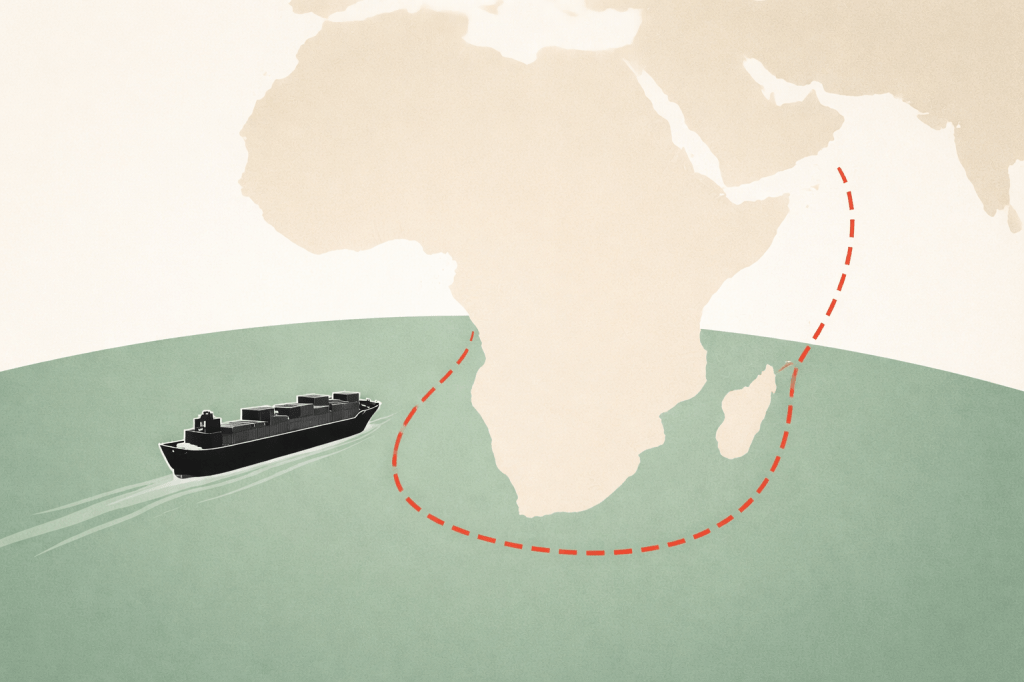
Global shipping firms have increasingly diverted vessels away from the Red Sea due to ongoing security risks, forcing a sustained shift in international trade routes. The Suez Canal, which typically handles a significant portion of global maritime traffic, has seen reduced transit volumes as operators opt for longer routes around the southern tip of Africa. This adjustment has added days or weeks to shipping schedules and has disrupted tightly coordinated supply chains.
The change in routing has directly affected shipping costs, with longer voyages requiring more fuel and operational resources. These increased costs are being absorbed across multiple points in the supply chain, from carriers to importers and ultimately consumers. Industries reliant on just-in-time delivery models, including retail and manufacturing, are facing delays that complicate inventory planning and production timelines.
Insurance markets have also responded to the heightened risk in the region. War risk premiums for vessels operating near affected areas have risen, adding another layer of financial pressure for shipping operators. Some companies have chosen to avoid the region entirely rather than incur elevated insurance costs, reinforcing the shift toward alternative routes.
Ports outside traditional shipping lanes are seeing increased activity as traffic patterns adjust. Facilities in parts of southern Africa and the Mediterranean are handling redirected cargo, which has led to congestion in some areas. This redistribution of maritime traffic is testing port infrastructure that was not originally designed to handle sustained increases in volume.
Energy markets have also felt the impact of these disruptions. Tankers transporting oil and liquefied natural gas have been among those rerouted, contributing to longer delivery times and occasional volatility in energy pricing. While global supply has not been significantly constrained, the added uncertainty has introduced new variables for energy traders and policymakers monitoring market stability.
Governments and international organizations continue to assess the situation, with naval patrols and security measures aimed at protecting key shipping lanes. However, the persistence of risk has made it difficult for shipping companies to return to standard routing practices. As a result, many firms are planning for extended disruptions rather than treating the situation as temporary.
The ongoing adjustments in global shipping routes highlight the vulnerability of critical trade infrastructure to regional instability. As companies adapt to longer routes and higher costs, the effects are expected to continue shaping global trade patterns in the months ahead.
- • • • •
Reporting and writing by Levi C. Webb. AI tools were used selectively to assist with research and editorial support.
© 2026 Fat Wagner LLC. All rights reserved.



 Fat Wagner
Leave a comment