
Authored by Levi C. Webb
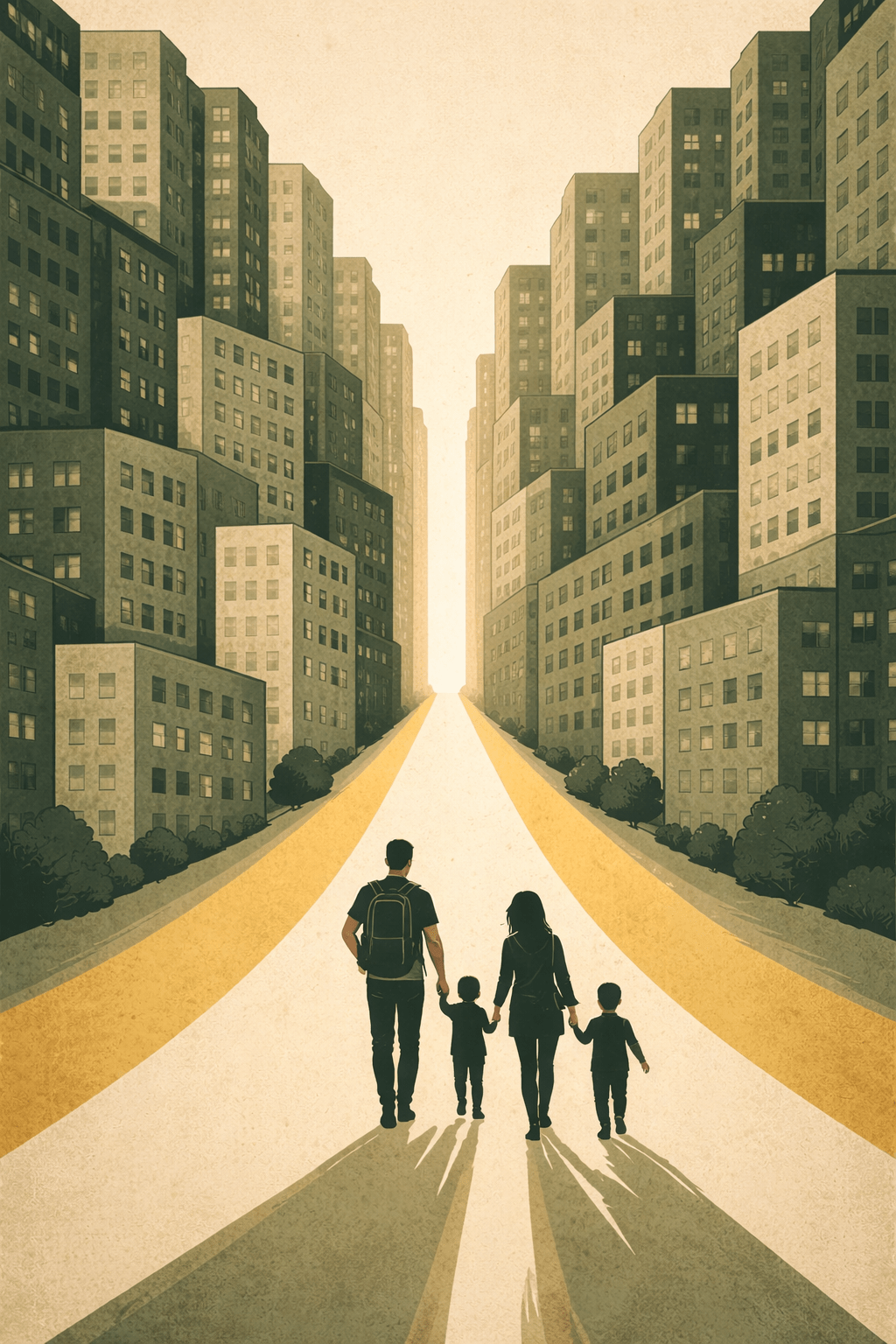
Rising housing costs and limited space in core Manhattan neighborhoods are driving families with multiple children toward larger, more affordable areas across New York City.
New York City’s real estate market over the past year has increasingly reflected a divide between high-cost, space-constrained central neighborhoods and more family-oriented areas offering larger living arrangements. While Manhattan remains a cultural and economic hub, families with two or more children are steadily shifting toward outer borough neighborhoods where space, schools, and long-term affordability are more attainable.
Median home prices and rents have remained elevated across Manhattan, particularly in neighborhoods like Tribeca, the Upper East Side, and the West Village. These areas continue to attract high-income buyers and renters, but the practical limitations of apartment size have made them less viable for larger households. Families seeking three-bedroom units or larger are often faced with significantly higher costs per square foot, prompting many to reconsider location priorities.
Brooklyn has emerged as a primary destination for families seeking balance between space and urban lifestyle. Neighborhoods such as Park Slope, Carroll Gardens, and Brooklyn Heights continue to see strong demand due to their access to parks, established school systems, and comparatively larger housing options. These areas offer a residential feel while maintaining proximity to Manhattan’s employment and cultural centers.
Queens is also gaining traction, particularly in neighborhoods like Astoria and Long Island City, where newer developments provide modern amenities alongside improved transit access. Further east, areas such as Forest Hills and Bayside are attracting families looking for even more space, often with access to single-family homes or larger multi-bedroom apartments. These neighborhoods provide a quieter environment while still allowing residents to remain connected to the broader city.
In the Bronx, select neighborhoods have begun to draw attention from buyers priced out of other boroughs. Riverdale, in particular, offers larger apartments, access to green space, and a suburban-like atmosphere within city limits. While historically less competitive than Brooklyn or Manhattan, parts of the Bronx are seeing increased interest as affordability pressures continue across the region.
Staten Island remains a consistent option for families prioritizing space above all else. Detached homes and larger properties are more common, though the trade-off includes longer commute times and reduced immediate access to Manhattan’s core amenities. For some households, this balance is acceptable given the significant cost differences and improved living space.
Real estate analysts note that the shift reflects broader lifestyle adjustments among families who want to remain within New York City but require practical living conditions. Access to transportation, school quality, and neighborhood safety have become primary decision factors, often outweighing proximity to traditional city centers.
The past year’s trends suggest that New York City’s identity as a dense urban environment is evolving for families, with outer boroughs increasingly serving as the foundation for long-term residency while still preserving access to the city’s economic and cultural ecosystem.
- • • • •
Reporting and writing by Levi C. Webb. AI tools were used selectively to assist with research and editorial support.
© 2026 Fat Wagner LLC. All rights reserved.



 Fat Wagner
Leave a comment