
Authored by Levi C. Webb
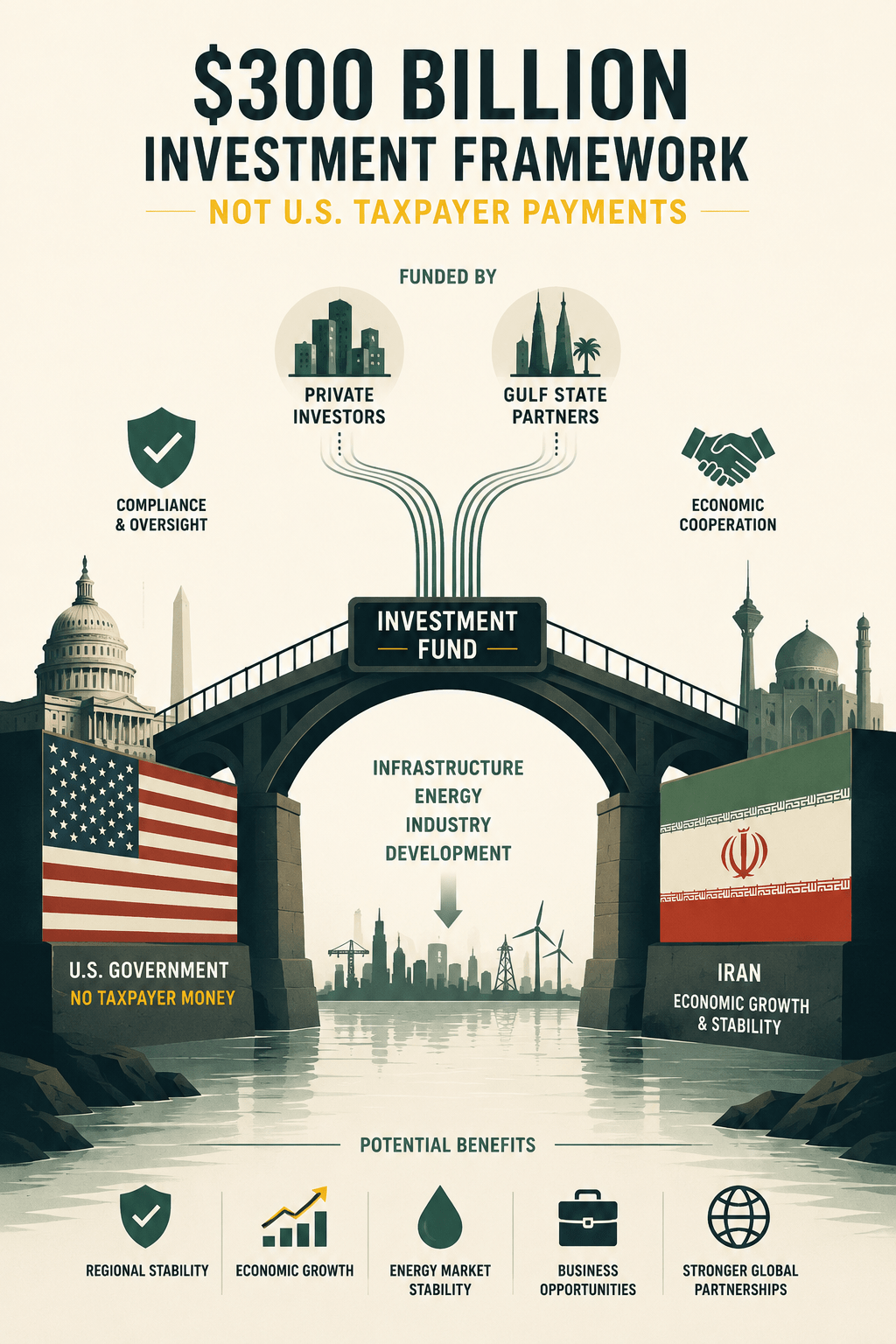
Reports surrounding a proposed U.S.-Iran memorandum of understanding suggest that a widely discussed $300 billion figure may refer to private investment and reconstruction financing rather than direct payments from American taxpayers.
The debate over a reported $300 billion arrangement involving Iran has generated headlines suggesting the United States plans to pay Tehran hundreds of billions of dollars. Public reporting from multiple outlets, however, indicates the proposal under discussion may be structured as an investment and development framework funded primarily through private capital and Gulf-state participation rather than direct appropriations from the U.S. Treasury.
Under such a model, governments would not necessarily transfer large sums of public money to Iran. Instead, private investors, infrastructure funds, energy companies, and regional financial institutions could be permitted to invest in approved projects if political and security conditions are met. Similar frameworks have been used in other regions where governments seek economic normalization without committing large amounts of taxpayer funding. The value of the fund reflects the potential scale of authorized investment activity rather than a government check written on day one.
Supporters of the concept argue that economic integration can create incentives for stability. Increased foreign investment often brings infrastructure development, industrial modernization, energy projects, transportation improvements, and employment opportunities. Advocates contend that countries with stronger economic ties to global markets may have greater incentives to comply with international agreements because access to investment becomes financially valuable.
Potential benefits to the United States would depend largely on the structure of any final agreement. American companies could gain access to future investment opportunities if sanctions restrictions were modified or lifted. Energy markets could potentially benefit from greater regional stability and increased production capacity, which may contribute to lower price volatility. Supporters also argue that economic engagement can sometimes provide leverage that military pressure alone cannot achieve.
The impact on the average American citizen is less direct. If no taxpayer funds are used, most Americans would not see an immediate financial cost. Any benefits would likely come indirectly through broader economic effects such as more stable energy markets, reduced geopolitical tensions, or increased opportunities for American businesses operating internationally. Critics argue that those benefits may be difficult for ordinary citizens to measure and may accrue primarily to investors, multinational corporations, and financial institutions rather than households.
Questions about risk remain significant. Private investors generally seek returns on investment, meaning projects must generate revenue to attract capital. Political instability, sanctions concerns, regulatory uncertainty, and security risks could make large-scale investment difficult even if governments support the concept. As a result, a proposed fund’s headline value may represent maximum potential investment rather than guaranteed capital deployment.
U.S. allies could experience both advantages and disadvantages. Gulf Arab states may view investment as a way to reduce regional tensions while creating new commercial opportunities. European allies could gain access to infrastructure, energy, transportation, and technology projects if economic restrictions ease. Increased economic activity could also strengthen trade corridors connecting Europe, the Middle East, and Asia. At the same time, some allies remain concerned that economic concessions could strengthen Iran’s regional influence if compliance mechanisms prove ineffective.
Opponents of the proposal argue that investment and economic normalization may provide resources that could indirectly increase Iran’s geopolitical influence. Supporters counter that investment tied to strict compliance requirements creates incentives for cooperation while maintaining the ability to reimpose restrictions if obligations are violated. The effectiveness of such an approach would depend on enforcement mechanisms, transparency requirements, and the willingness of participating nations to maintain unified oversight.
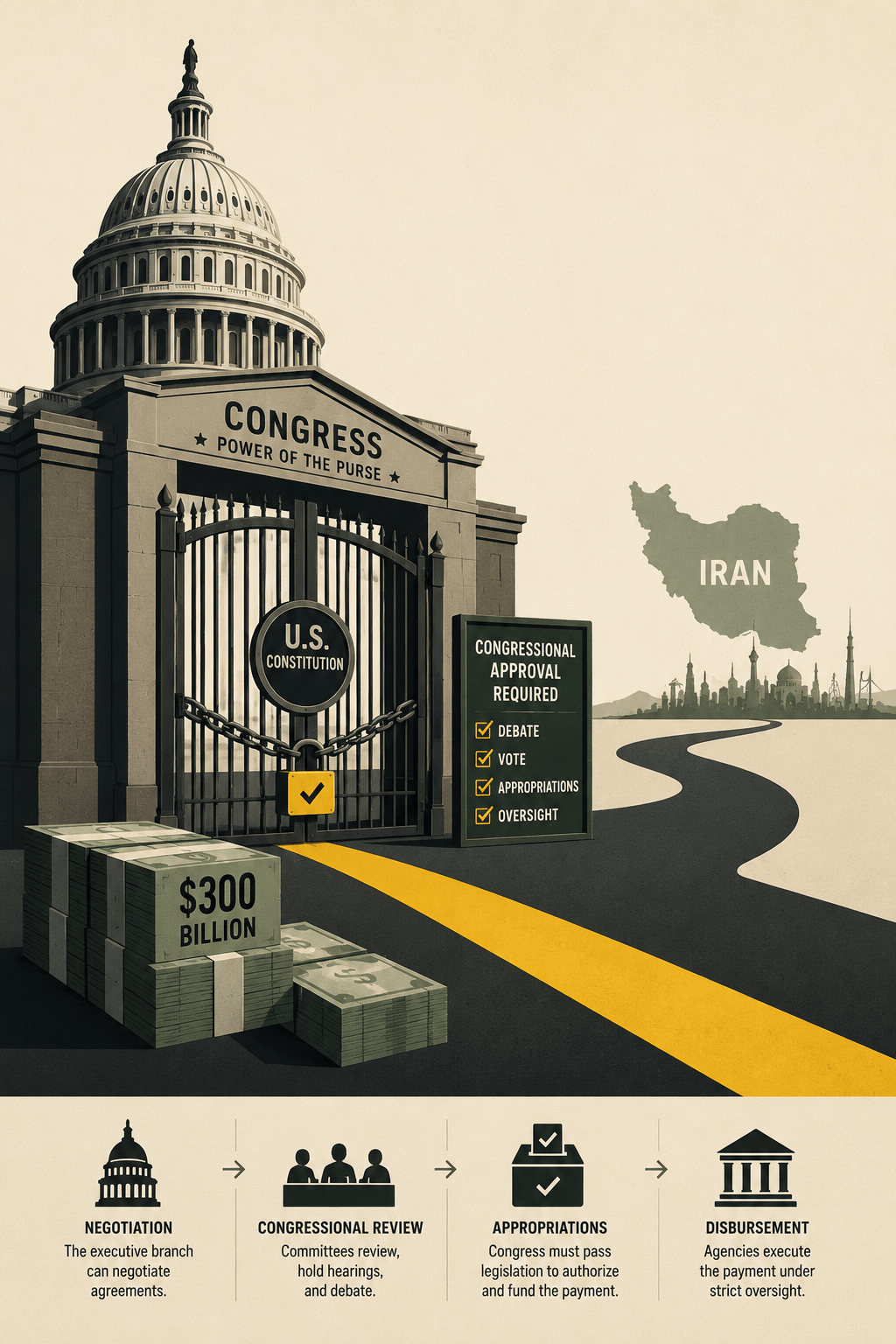
At present, the reported $300 billion figure appears substantially different from the claim that the United States government intends to send $300 billion in taxpayer funds directly to Iran. The distinction between government spending and private investment is central to understanding the proposal. Whether the concept ultimately advances will depend on diplomatic negotiations, investor confidence, compliance requirements, and the political decisions of governments across the region.
• • • • •
Reporting and writing by Levi C. Webb. AI tools were used selectively to assist with research and editorial support.
© 2026 Fat Wagner LLC. All rights reserved.


 Fat Wagner
Leave a comment