
Authored by Levi C. Webb
A 13-night Airbnb stay in Crete ended in a dispute over unavailable amenities, a failed air conditioner and an attempted charge for the repair.
A two-week family stay in Crete became a dispute over advertised amenities, a failed air conditioner, and who should pay when equipment breaks during vacation.
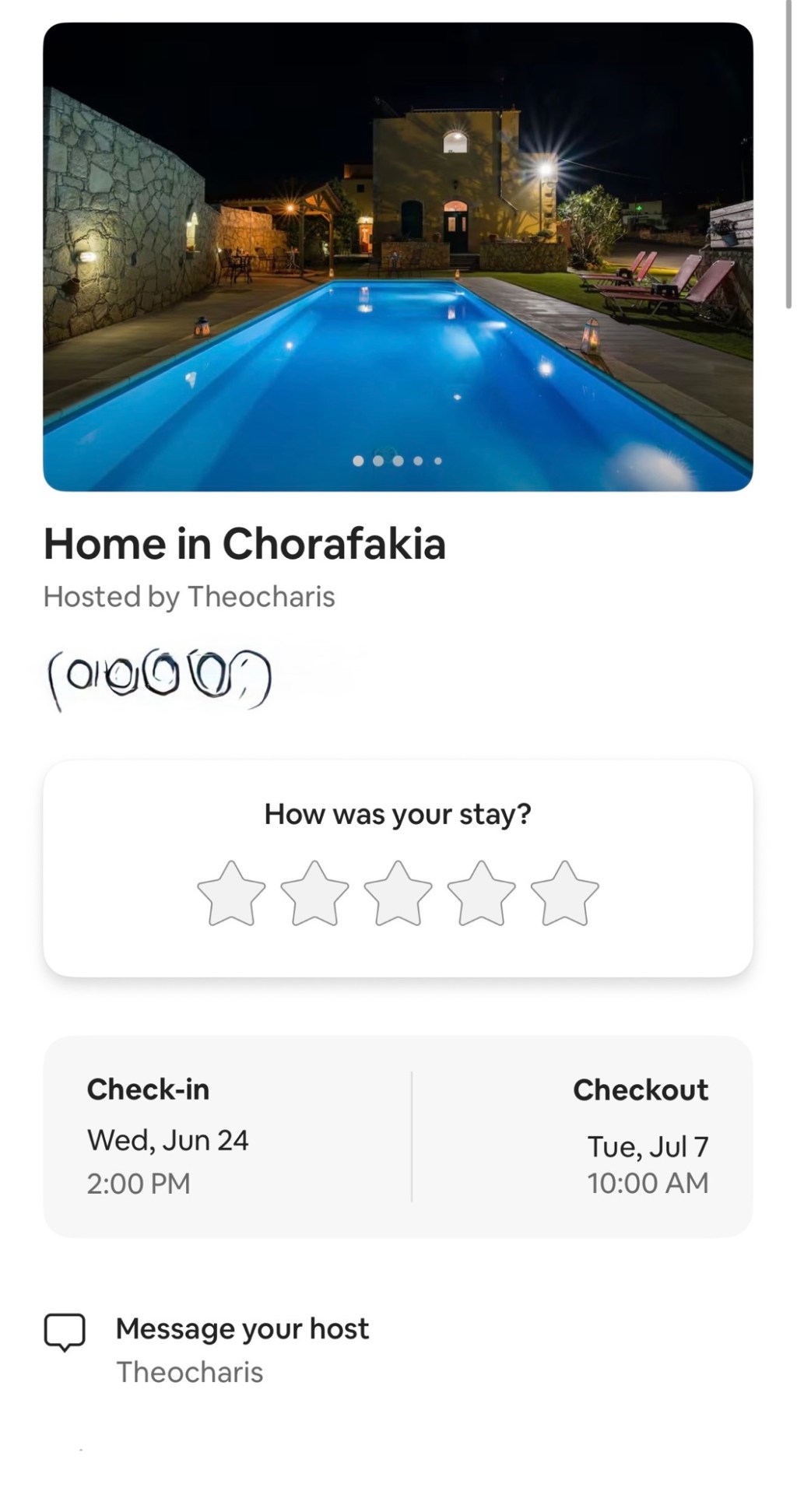
I booked Skandalis Apartments Kalliopi in Chorafakia, Crete, from June 24 through July 7, 2026, at a total cost of $2,758.14. The Airbnb listing advertised Wi-Fi, air conditioning and a TV among its amenities, while the property description specifically promoted the ability to “stay connected with WiFi” and enjoy “year-round comfort with air conditioning.” Those amenities became central to a dispute that continued during the stay and after checkout. The property cleanliness was the first and most significant issue.
The condition of the apartment became a significant issue immediately. This was not a complaint about minor wear, an overlooked speck of dust or a vacation rental that simply showed its age. Several kitchen items appeared visibly dirty, including utensils and equipment that guests would reasonably expect to be clean before preparing food. One wooden spoon had extensive visible mold-like growth across its surface, while other items showed accumulated grime and residue.
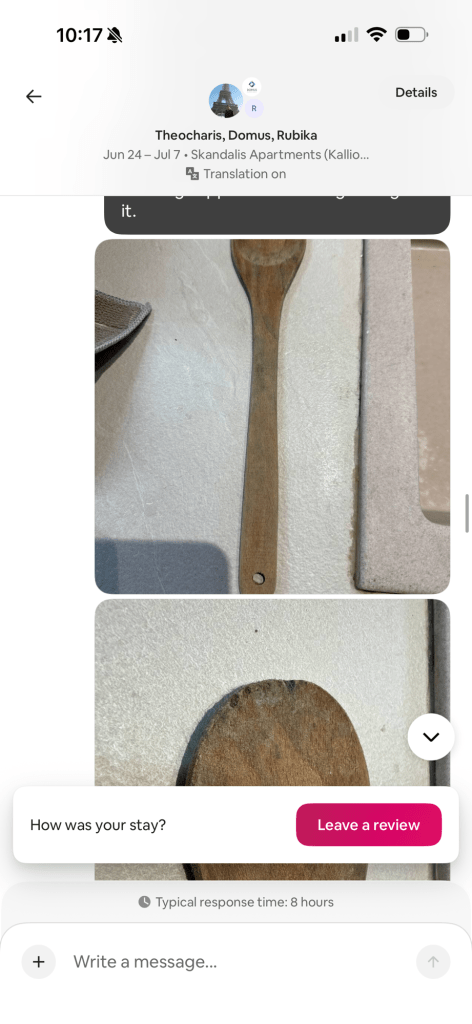


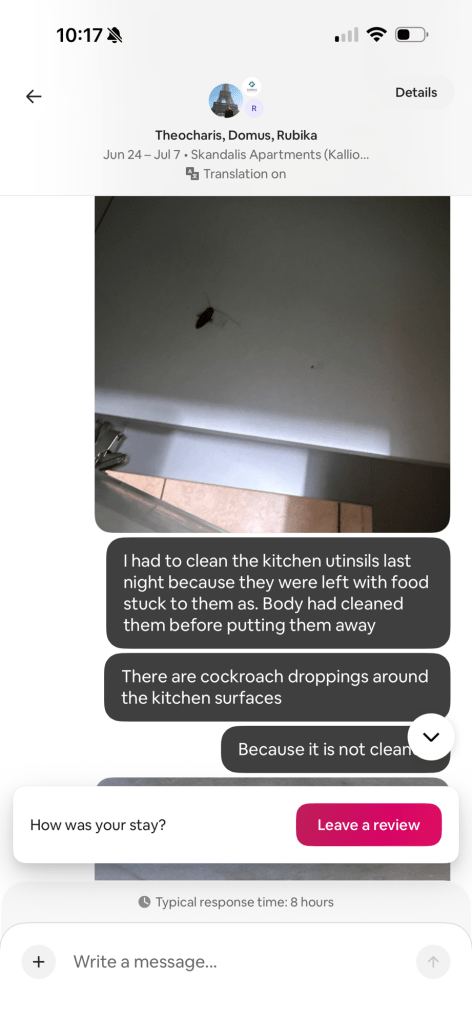
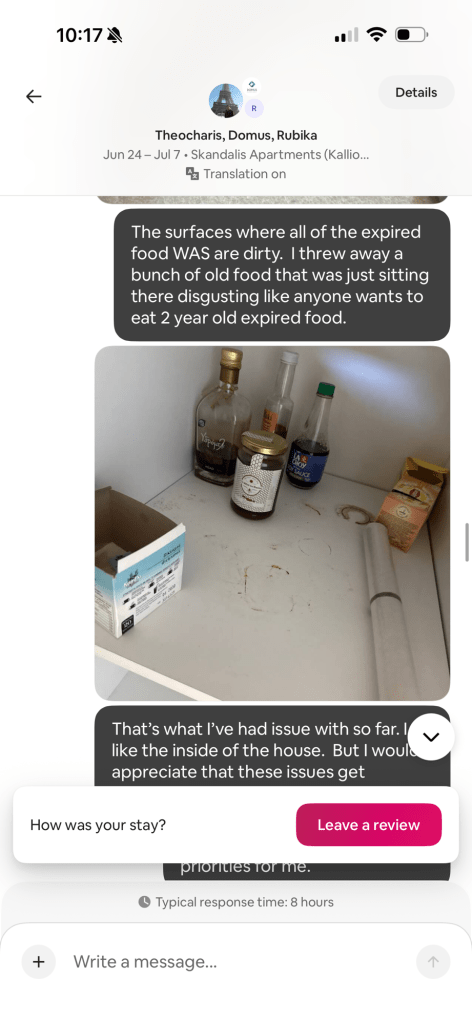
The problems extended beyond a single utensil. I documented the condition with photographs and raised the issue directly with the host rather than immediately turning it into a public complaint. My concern was basic: a guest should not have to inspect and clean kitchen equipment before determining whether it is sanitary enough to use. The condition of the items also made it difficult to dismiss the problem as something that occurred between routine cleanings.

To the host’s credit, the complaint prompted additional cleaning and an effort to address some of the problems. That responsiveness is part of the complete record and should be acknowledged. But remedial cleaning after a guest discovers and documents unsanitary conditions is not the same as delivering a properly cleaned accommodation at check-in. For a stay costing more than $2,700, I expected the apartment and its kitchen equipment to be ready for normal use when my family arrived.
The cleanliness issue also became more significant in the context of the overall stay. By itself, a poorly cleaned kitchen might have been an unpleasant but resolvable problem. Combined with the unusable internet connection, television problems and eventual air-conditioning failure, however, it contributed to a broader experience in which multiple advertised or basic expectations required troubleshooting, repeated messages and intervention during what was supposed to be a family vacation.
The internet connection was effectively unusable inside the apartment, despite Wi-Fi being advertised. I spent time troubleshooting the property’s network equipment and trying to identify where a usable signal could be found, including explaining that I work professionally in information technology.
The internet problem also appeared to be a design issue, not simply a temporary outage. The property used a hotel-style wireless distribution system, but the access points were all mounted outside the rental units, leaving the signal too weak to reliably penetrate the building’s walls. The owner acknowledged that Wi-Fi did not reach the downstairs bedroom. I traced the network equipment to what appeared to be a line-of-sight wireless link aimed directly at another antenna on the owner’s home.
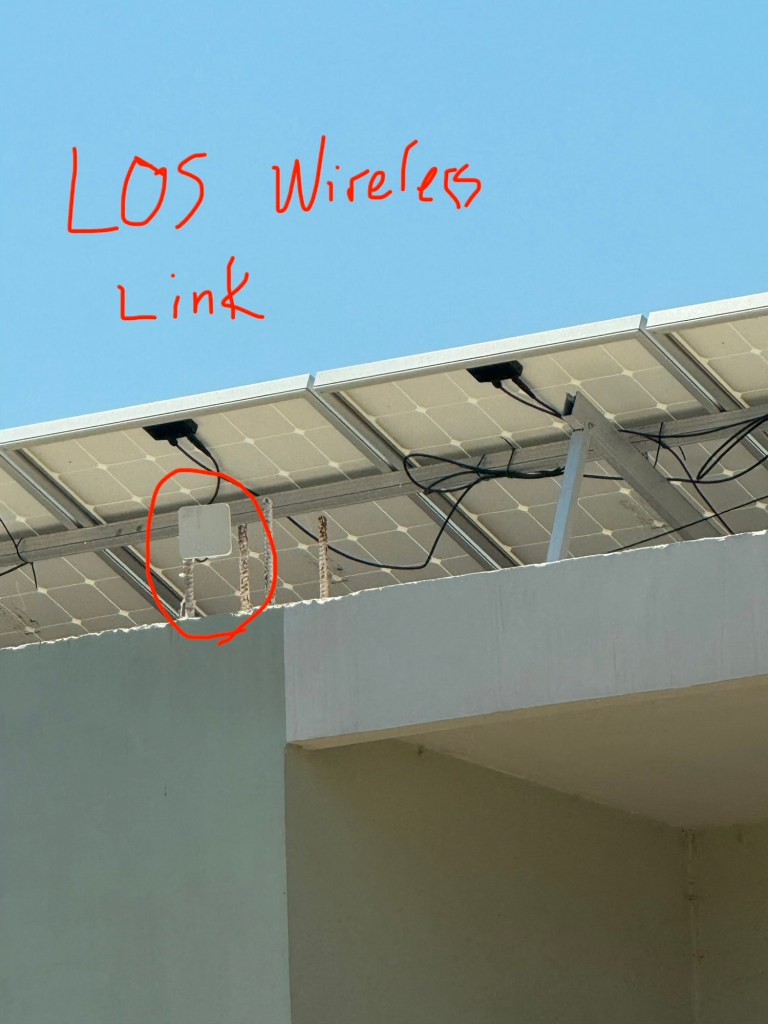
A scan of the local network showed multiple connected devices, which appeared consistent with the owner’s residence and the rental units sharing internet service distributed from a central connection through the line-of-sight link and exterior access points.
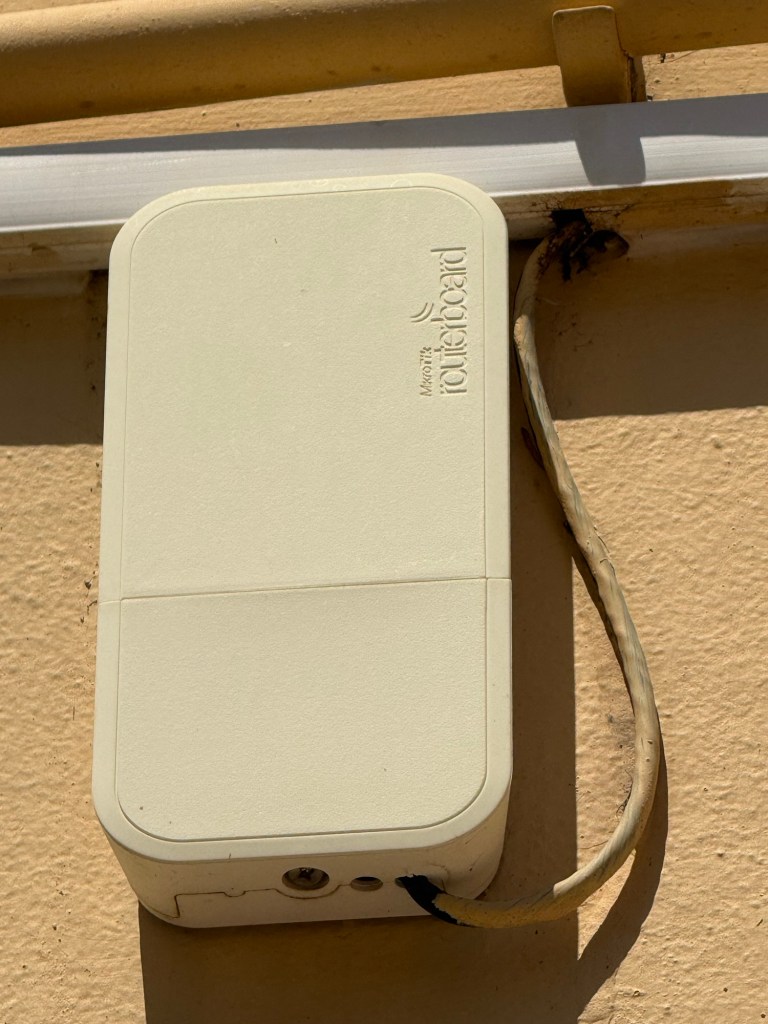
Based on what I could observe, the fundamental problem was that there were no adequate indoor access points or receivers inside the rental itself. In other words, the advertised Wi-Fi existed, but the way it was distributed made reliable coverage throughout the rental effectively impossible.
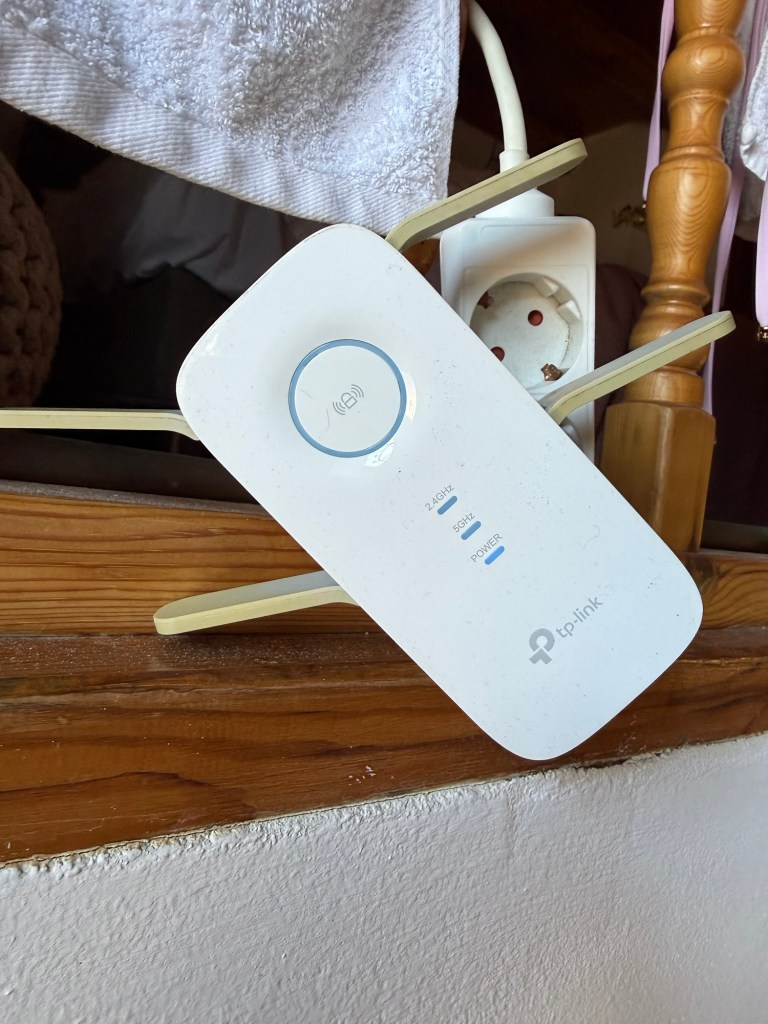
After making another comment about the internet issue the owner dropped off a wireless extender but could not give me the password instructions on how to configure it. They asked if I was capable of configuring the device and I said if they can provide me the password and point me to where the existing access points were so I could best determine the extenders placement. it was never configured.
The television also could not provide the expected connected functionality, leaving another advertised amenity unavailable. What began as an effort to resolve technical problems became increasingly frustrating as I felt the problems were being disputed rather than acknowledged.
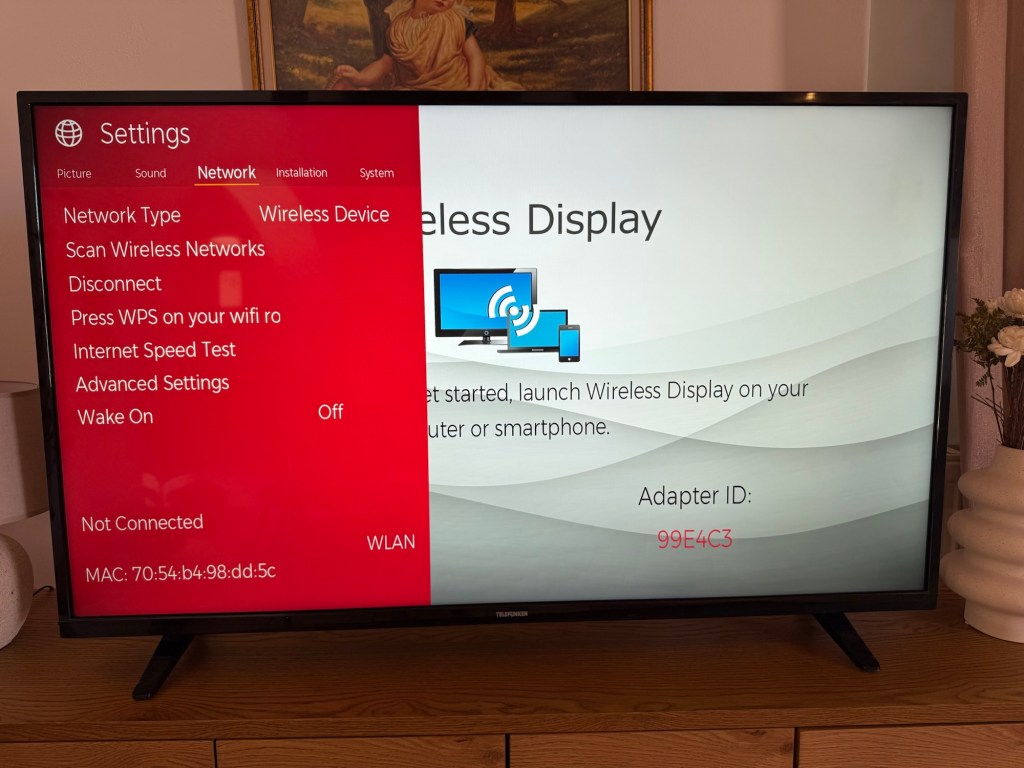
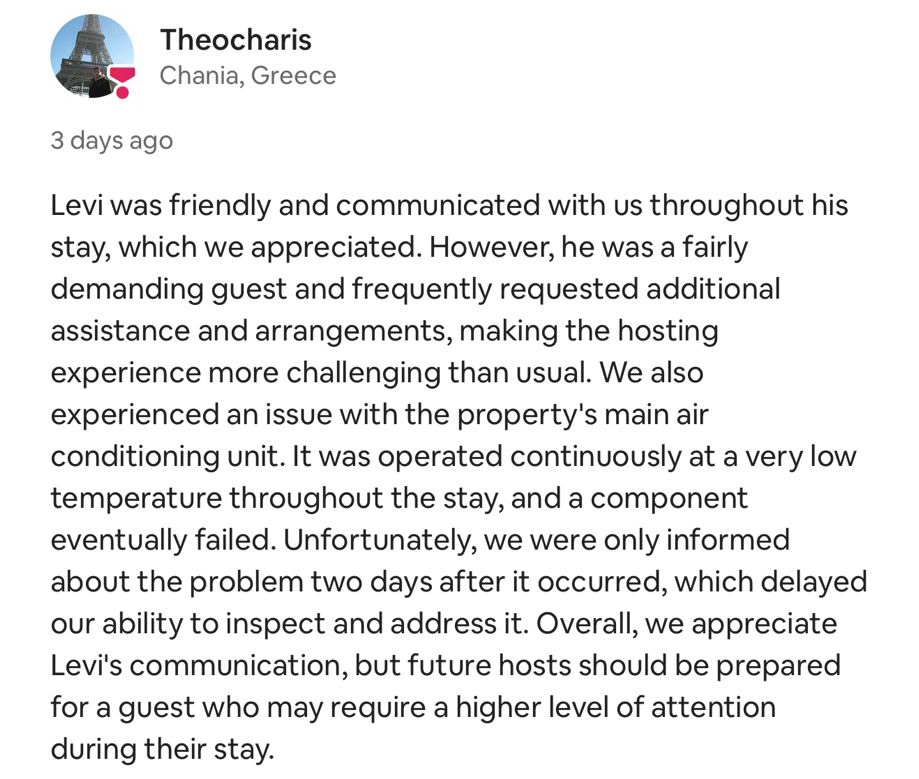
Near the end of the stay, the air conditioner stopped producing cold air. The system had previously been operating, but a failed capacitor was later identified as the problem. The host subsequently sought reimbursement from me for the repair, arguing that the way the air conditioner had been used contributed to the failure. I disputed that claim because an electrical capacitor can fail as a component malfunction, and I did not believe a guest should be financially responsible for an ordinary equipment failure without evidence of misuse or damage.
The disagreement became more significant when I reviewed the property’s existing guest feedback. A September 2021 review described an air-conditioning breakdown and stated that the owner believed the problem was the guest’s fault. That review does not establish that the same equipment or mechanical defect was involved in my stay, but the similarity was notable. Another guest in September 2022 wrote that the host requested approximately $300 in reimbursement after checkout, while a June 2025 guest described a separate dispute involving the condition of the apartment and a request for additional cleaning money.
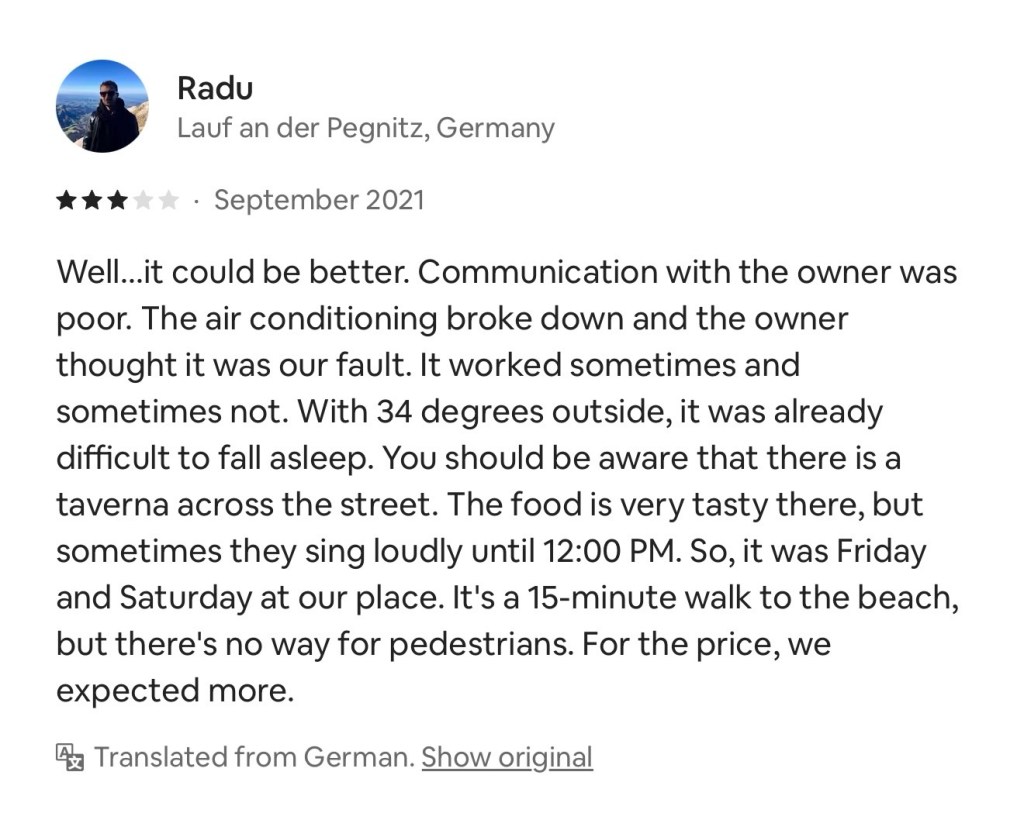
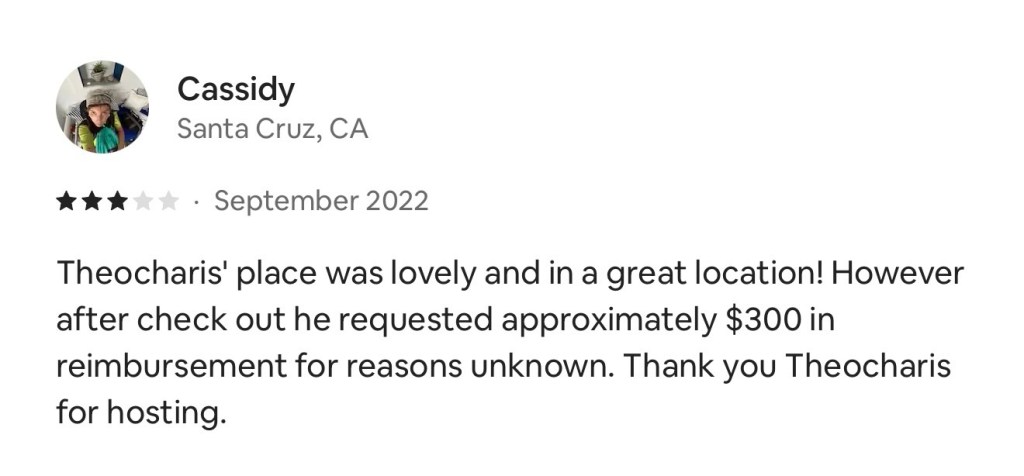

The host strongly disputed that 2025 guest’s account in a public response, saying the apartment had been left in extremely poor condition and describing the guest’s behavior toward staff as aggressive and inappropriate. The host said the additional payment issue resulted from the condition in which the property was left rather than an unexpected charge. Those competing accounts cannot independently establish what happened during that stay, but they show that my dispute was not the first publicly documented disagreement involving a guest, property condition and additional payment.
My own review reflected what I experienced during a family summer vacation that I had booked with high expectations. The host’s public response disputed my account rather than accepting my description of the unavailable internet, television problems and air-conditioning failure. The disagreement ultimately became about more than whether individual amenities worked. It became a question of how a host responds when a guest reports legitimate problems and whether responsibility for a mechanical failure can be shifted to the person who happened to be staying at the property when it occurred.
The property also has positive reviews, and the listing showed the host as a Superhost with years of hosting experience. That context matters because a fair account should not suggest that every guest had the same experience. At the same time, positive reviews do not erase documented complaints, and the earlier review describing an air-conditioning failure followed by blame directed at the guest is difficult to ignore when evaluating what happened years later.
Short-term rental platforms depend heavily on trust between guests and hosts, particularly when travelers are paying thousands of dollars for extended stays. Guests should be able to rely on material advertised amenities, while hosts have a legitimate right to seek reimbursement for actual damage caused by guests. The critical distinction is evidence: a broken appliance component is not automatically evidence that the guest caused the failure, and a public disagreement does not make either side’s version true simply because it is stated forcefully.
- • • • •
Reporting and writing by Levi C. Webb. AI tools were used selectively to assist with research and editorial support.
© 2026 Fat Wagner LLC. All rights reserved.


 Fat Wagner
Leave a comment